
A soap dispenser is not exactly the kind of thing most people spend much time thinking about.
You wash your hands, press the pump, use the soap, rinse, and move on.
Then you put an automatic dispenser beside the sink and the routine changes slightly. Hold your hand underneath it, wait for the sensor, and the soap comes out without touching anything.
That sounds like a small difference. And honestly, it is.
But there are places where that small difference makes considerably more sense than others.
A shared office bathroom, a family kitchen, or a sink that gets used dozens of times a day can benefit from a touchless dispenser. In a bathroom used by one person, meanwhile, a regular pump may be perfectly adequate.
So before treating an automatic soap dispenser in Nepal as another “smart” household gadget, it is worth asking a simpler question: where does it actually solve a problem?
The real difference is the pump you no longer have to touch
Traditional liquid soap dispensers require contact. Your hand presses the pump, the soap comes out, and the next person does the same thing.
A sensor dispenser removes that step.
Nephot’s Automatic Foaming Soap Dispenser – Touchless Hand Wash uses an infrared sensor to detect your hand and dispense foam automatically. The current listed price is Rs. 721, and the unit is designed for kitchens, bathrooms, offices and schools.
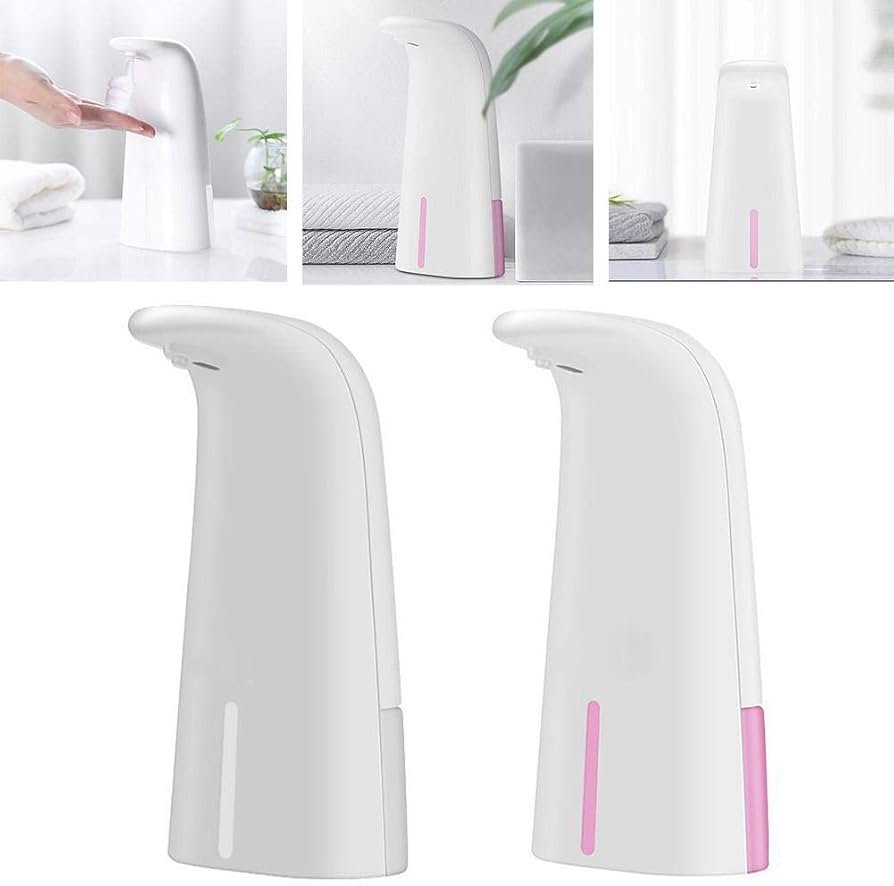
That does not mean a touchless dispenser somehow makes hand washing unnecessary or eliminates germs. The important part is much simpler: it reduces one commonly touched surface during the hand-washing process.
The Centers for Disease Control and Prevention recommends regular hand washing with soap and clean running water and also recommends cleaning frequently touched surfaces.
The dispenser is therefore an accessory to good hand hygiene, not a replacement for it.
Where an automatic dispenser starts making sense
1. A family bathroom
Think about how many times the soap pump gets touched in a busy household.
Someone comes home. Or washes their hands before eating. Someone uses the bathroom. A child washes their hands after playing outside. Guests use the sink.
The same pump gets handled over and over.
A touchless dispenser makes the interaction a little cleaner and also removes the small annoyance of trying to press a pump when your hands are already wet, dirty, or covered in something you would rather not put on the dispenser.
This is especially useful when several people share one bathroom.
2. The kitchen sink
The kitchen is probably one of the more convincing places for one.
Imagine handling raw ingredients, washing vegetables, cleaning dishes, or dealing with something greasy. Reaching for a traditional soap pump means touching it before washing your hands.
With a sensor dispenser, you can simply place your hand underneath the nozzle.
Nephot’s model is specifically listed for kitchen use and has a top-fill design, so refilling does not require taking apart a complicated system.
That kind of convenience matters more in a busy kitchen than it does on a rarely used guest-room sink.
3. A shared office
An office bathroom has a different problem from a home bathroom.
You do not know how many people have used the same soap pump before you.
A touchless dispenser cannot guarantee a germ-free environment, but removing one shared touch point is a reasonable convenience in a high-use space. The CDC also recommends providing accessible soap, water and hand-drying facilities in workplaces.
For a small office, a compact countertop dispenser may be enough. Larger workplaces may need a higher-capacity or wall-mounted system instead.
4. Homes with children
Children are often perfectly capable of washing their hands but somehow manage to turn a simple sink into a small engineering experiment.
Too much soap. Wet pump. Soap around the bottle. Another pump.
An automatic foaming dispenser can make the process easier because the child only needs to place a hand below the sensor.
The important thing is still teaching proper hand washing. The dispenser simply removes one unnecessary step.
Foam is not the same thing as better cleaning
This is worth clearing up because product descriptions can make foaming systems sound more powerful than they really are.
Foam can make soap feel easier to spread across the hands, but the dispenser itself is not what cleans your hands.
The important parts are still water, soap, rubbing all areas of the hands, rinsing and drying.
The CDC recommends scrubbing with soap and water for at least 20 seconds, covering areas such as the backs of the hands, between the fingers and underneath the nails.
So if someone buys an automatic dispenser and then barely washes their hands because the machine feels “more hygienic,” they have missed the point.
The machine changes how the soap is delivered.
It does not change the basic hand-washing process.
What makes a touchless dispenser practical?
There are a few details that matter more than having a fancy-looking sensor.
Sensor response
The sensor needs to detect your hand without requiring you to wave it around repeatedly.
A dispenser that works inconsistently can actually become more annoying than a normal pump.
Refill design
A simple refill system matters because soap eventually runs out.
Nephot’s current model has a top-fill design intended for straightforward refilling.
That sounds like a minor feature until you have to refill the thing.
Counter space
Bathroom and kitchen sinks can already be crowded.
A dispenser with a compact footprint is easier to live with than something that occupies half the sink area.
The Nephot model is described as compact and portable, making it possible to move it between suitable locations rather than treating it as a permanent installation.
Soap compatibility
This is one detail people often overlook.
Not every dispenser handles every type of soap in exactly the same way. A foam dispenser in particular may be designed around a certain consistency or dilution.
Before filling it, check the manufacturer’s instructions rather than assuming that any random liquid can go inside.
And when refilling, do not simply keep topping up an old batch indefinitely. CDC guidance notes that adding soap to partially empty dispensers can create contamination risks.
Emptying and cleaning the dispenser according to its instructions is a better habit.
When a normal soap pump is still enough
Not every sink needs automation.
If you live alone and use a bathroom where the soap pump is touched only a few times a day, the practical difference may be tiny.
The same applies to a guest bathroom that sees very little use.
There is also the question of maintenance. A normal pump has almost nothing to troubleshoot. An automatic dispenser introduces a sensor and whatever power system its particular design uses.
That is not necessarily a problem, but it is another thing to maintain.
The best reason to buy one is therefore not “automatic products are better.”
It is that the touchless mechanism solves a specific annoyance in a frequently used place.
Automatic soap dispenser vs regular dispenser
| Feature | Automatic dispenser | Regular pump |
|---|---|---|
| Physical contact | No pump contact | Requires pressing |
| Ease of use | Hand under sensor | Press pump |
| Power/technology | Depends on model | None |
| Maintenance | Sensor and dispenser care | Very simple |
| Shared-use convenience | Useful in busy spaces | Basic |
| Cost | Usually higher | Usually cheaper |
| Best suited to | Busy kitchens, bathrooms, offices | Almost any sink |
The choice is less about which design is universally better and more about how the sink is actually being used.
Is Rs. 721 reasonable for one?
Nephot currently lists its automatic foaming soap dispenser at Rs. 721, reduced from a listed Rs. 789.
For context, automatic soap dispensers in Nepal vary considerably by design. Current listings from other Nepal-based retailers include models around Rs. 1,000 and substantially more expensive units, depending on capacity, sensor system, mounting method and other features.
That makes it more useful to compare the actual features than to assume a higher price automatically means a better dispenser.
If the main thing you want is touch-free dispensing for an ordinary household sink, a relatively simple model may be enough.
If the dispenser will serve a busy office, restaurant, clinic or other high-use environment, capacity, mounting and durability become more important.
The simplest way to decide
Ask yourself three questions.
Does the sink get used frequently?
If several people use it throughout the day, touchless operation becomes more useful.
Do you regularly touch the soap pump with dirty or wet hands?
If yes, removing that contact can make the routine more convenient.
Would you notice if the dispenser stopped working?
If the answer is “not really,” a basic manual dispenser might be all you need.
If all three answers point toward frequent use, an automatic dispenser starts looking less like a novelty and more like a practical little upgrade.
And if you are already looking at small improvements around the kitchen or bathroom, Nephot’s Home & Living collection includes other everyday household products alongside dispensers and organizers.
Small upgrade, specific purpose
Automatic soap dispensers are easy to oversell because “touchless” sounds more impressive than it really is.
The actual benefit is much simpler.
You remove one shared touch point. You make dispensing easier when your hands are wet or dirty. In a busy household or shared workplace, that can be useful several times every day.
In a rarely used sink, it may not make much difference at all.
That is probably the better way to look at an automatic soap dispenser in Nepal. Not as a must-have smart-home device, but as a small piece of equipment that makes sense when the particular sink, people and routine justify it.