
Carrying homemade food to work or college is easy enough. The awkward part often comes later.
You packed your meal in the morning, spent hours away from home, and now the food is sitting in a container at room temperature. There may be no microwave nearby, no kitchen you can use, and no convenient way to warm it.
An electric lunch box is designed around exactly that situation.
Unlike a normal tiffin, it uses an electrical heating element to warm food inside the container. That sounds useful, but it is not automatically the right lunch box for everyone. If you already have access to a microwave, rarely carry food, or prefer meals that stay warm in an insulated container, an ordinary lunch box can be more practical.
So where does an electric lunch box actually fit into everyday life in Nepal?
What makes an electric lunch box different?
A normal lunch box mainly gives you a container for carrying food. An insulated tiffin adds temperature retention. An electric lunch box adds another function: it can warm the food after you have packed it.
Nephot’s current Electric Lunch Box is listed at Rs. 999, reduced from Rs. 1,200 at the time of checking. The listing describes it as a portable food warmer with a 304 stainless-steel food container, carrying handle and sealing ring. It is also listed for 12V, 24V and 110V use.
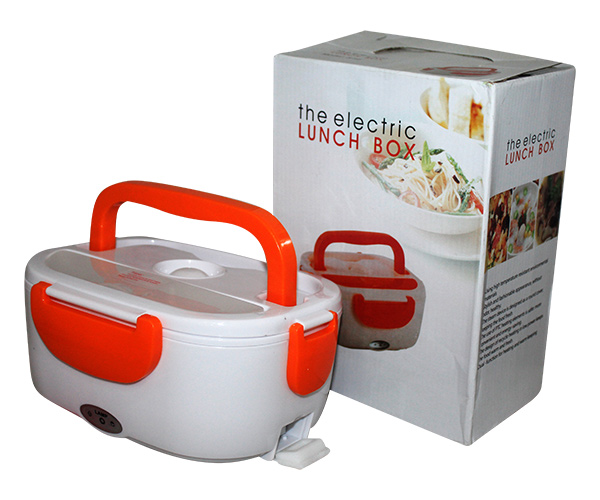
That combination makes the product particularly relevant to people who spend a large part of the day away from a kitchen.
But the electrical function is also the reason you need to think about where and how you will use it.
An office worker may get more use from it than a home user
Consider a typical office routine.
You prepare food at home, put it in your bag and leave for work. By lunchtime, the food may no longer be as warm as you would prefer. If your workplace has a microwave, there is an obvious solution.
If it does not, the situation changes.
An electric lunch box gives you another option, provided you have an appropriate power source. You can keep your meal in the container and use the heating function when you are ready to eat.
That makes the product less about replacing a normal tiffin and more about solving a specific workplace problem.
For someone who eats outside almost every day because there is no convenient way to warm food, even a relatively inexpensive appliance can become useful.
For someone whose office already has a microwave, the extra electrical lunch box may simply add another thing to carry.
College and rented-room life is a different situation
Students can have a completely different setup.
Someone living at home and eating lunch at home may have little reason to carry an electric lunch box. A student staying in a rented room, hostel or shared accommodation may have a different routine.
If food is prepared earlier and eaten several hours later, keeping a way to warm the meal can be convenient.
There is also the issue of portability. A lunch box that works well in a kitchen may be annoying when it has to be carried alongside books, a laptop and other belongings.
This is where size, handle design and the actual amount of food you normally carry become more relevant than a long list of features.
Nephot categorizes its Electric Lunch Box under both Electronics and Home & Living, which reflects the fact that it sits somewhere between a kitchen item and a small electrical appliance.
What if you commute by bus or micro?
This is where expectations need to be realistic.
The product may be portable, but portability does not mean you can simply plug it in anywhere.
Nephot’s listing specifically mentions 12V, 24V and 110V use.
So someone who spends most of the day travelling by bus or microbus may not get much practical value from the heating function while travelling. There is no convenient electrical outlet available during an ordinary commute.
Someone travelling by private vehicle or working from a location where an appropriate power connection is available has a different use case.
In other words, “portable” and “usable while travelling” are not quite the same thing.
The power source should be part of the decision before buying.
Electric lunch box vs a regular insulated tiffin
This is probably the most useful comparison to make.
An electric lunch box and an insulated tiffin are trying to solve related but different problems.
Nephot’s 1.9L Stainless Steel Heat Preservation Tiffin is listed with a 1.9-litre capacity and is designed to retain hot or cold food for up to eight hours according to its product information. It does not need electricity.
That can make more sense when:
- You pack food while it is already hot.
- You do not have access to electricity.
- You want a simpler container.
- You are travelling somewhere without a suitable power source.
- You want to avoid carrying an electrical appliance.
An electric lunch box can make more sense when:
- You specifically want to warm food later.
- You have a suitable power source at work or elsewhere.
- You regularly spend several hours away from home.
- Cold or room-temperature meals are a recurring inconvenience.
Neither is universally better.
The useful question is what happens between packing the food and eating it.
The power connection deserves more attention than the product name
“Electric lunch box” sounds straightforward, but power specifications can vary between models.
Nephot’s product listing mentions 12V, 24V and 110V compatibility.
That is important because you should not assume that a lunch box can be connected to whatever socket happens to be nearby.
If you plan to use one in a vehicle, check the relevant voltage and connection before plugging it in. If you intend to use it in an office, check whether there is a suitable outlet available.
This is especially relevant for people who see phrases such as “car lunch box” in product listings. A product being marketed for vehicle use does not mean every vehicle connection is automatically suitable.
The safest approach is simple: follow the power specifications supplied with the particular product.
What kind of meals suit this setup?
An electric lunch box makes the most sense when you are carrying meals that you would normally prefer to eat warm.
Rice, vegetables, noodles and similar prepared meals fit naturally into the concept.
The container is less useful for foods that you normally eat cold.
There is also a practical difference between warming and cooking. A portable food warmer should not automatically be treated like a miniature kitchen. The purpose is to warm prepared food rather than turn a lunch box into a complete cooking appliance.
That distinction matters when comparing products online because product titles can sometimes make small appliances sound more capable than their actual intended use.
Capacity is about your normal meal, not the biggest number
A larger lunch box is not necessarily better.
If you normally carry one meal, an unnecessarily large container takes up additional space in your bag. If you carry food for a long workday, however, a small container may become frustrating.
The separate Nephot insulated tiffin provides one useful point of comparison at 1.9 litres.
When looking at an electric model, consider what you actually pack:
- One main meal
- Main meal plus vegetables
- Rice and curry separately
- Lunch plus snacks
- Food for one person or more than one person
Capacity should follow the meal rather than the other way around.
The container matters as much as the heating function
It is easy to focus on the fact that a lunch box is electric and overlook the part you interact with every day: the food container.
Nephot’s current model is described as having a 304 stainless-steel portable food container and a sealing ring intended to reduce leakage.
Those details are more useful for everyday use than simply knowing that the product can heat food.
Think about what happens when you put the lunch box inside a backpack or carry it across Kathmandu. A good seal becomes much more important when the container contains curry or other liquid food.
The handle also matters if you regularly carry the lunch box separately from your main bag.
Cleaning is another practical consideration
Anything that carries food needs regular cleaning. An electrical lunch box simply requires a little more attention because it contains both food-contact components and electrical parts.
Do not assume that the entire appliance can be washed under running water.
Check the manufacturer’s instructions for which parts can be removed and washed, and keep electrical connections away from water unless the product specifically states otherwise.
This is not the most exciting specification to read while shopping, but it becomes important when the lunch box is being used five days a week.
What does the price actually tell you?
Nephot currently lists its Electric Lunch Box at Rs. 999.
That puts it into the relatively accessible end of the electric lunch-box market, but price alone does not tell you whether it is useful for your particular routine.
A Rs. 999 lunch box can be poor value if you never have access to electricity.
A more expensive model can also be poor value if you only need somewhere to carry food.
The value comes from solving a problem that happens regularly.
If you are repeatedly buying outside food because your homemade lunch is inconvenient to warm, the calculation is different from someone who is perfectly happy eating a room-temperature meal.
There is also a simple no-electricity option
Sometimes the answer is not another appliance.
Nephot’s Portable Stainless Steel Heat Preservation Tiffin is designed specifically around retaining temperature rather than adding heat later. It is listed as keeping food hot or cold for up to eight hours.

For someone leaving home with freshly prepared food in the morning and eating it around lunchtime, that may be enough.
This is an important distinction when searching for a lunch box online. “Keeps food warm” and “heats food” describe different functions.
One relies on insulation.
The other relies on an external energy source.
When an electric lunch box makes sense
An electric lunch box starts making more sense when several things line up:
You regularly carry food from home.
Or spend several hours away from your kitchen.
You prefer the food warm.
There is no convenient microwave.
There is a suitable electrical connection where you intend to heat the food.
If most of those conditions apply, the product is solving a real problem rather than adding a gadget to your kitchen.
And when it doesn’t
There are equally good reasons not to buy one.
A regular lunch box may be enough if you eat shortly after preparing the food.
An insulated tiffin may be better if you spend the day travelling without reliable access to electricity.
A microwave may make more sense if your workplace already provides one.
And if you rarely carry lunch at all, there may be no reason to buy a specialised lunch container.
That is why electric lunch boxes are better understood as a specific convenience product, rather than an automatic upgrade over ordinary lunch boxes.
A quick comparison
| Your situation | What may make more sense |
|---|---|
| Office with microwave | Regular lunch box |
| Office without microwave but with suitable power | Electric lunch box |
| Long commute with no power access | Insulated tiffin |
| College with access to electricity | Electric lunch box can be useful |
| Travel without reliable electricity | Insulated lunch box |
| Food eaten soon after preparation | Regular lunch box |
| Carrying lunch for several hours | Insulated or electric, depending on access to power |
| Want to warm prepared food later | Electric lunch box |
There is no single answer for everyone.
The useful choice depends on your routine, not on which product has the longer feature list.
What to check on Nephot before ordering
If an electric lunch box fits your routine, check the actual product listing before placing the order.
Look at:
- Listed voltage and power requirements
- Container material
- Capacity
- Sealing design
- Carrying handle
- What cables or accessories are included
- Cleaning instructions
- Dimensions
- Intended power source
Nephot’s Home & Living collection also contains other everyday household products, so shoppers can compare the lunch box with conventional kitchen and home-storage options rather than treating it as an isolated purchase.
For the current Electric Lunch Box, the product listing gives the core information needed to decide whether the format fits your routine.
An electric lunch box is neither a necessity nor a gimmick for everyone. It is useful in the fairly specific situation where you carry prepared food, want it warm later and have somewhere appropriate to power the heater.
For everyone else, a regular or insulated tiffin may be the simpler answer.