
You don’t need a large piece of land to start gardening.
A few pots on a balcony, some grow bags on a terrace, or even a small area around your home can be enough to grow flowers, herbs, vegetables and other plants. The difficult part usually comes later, when watering, pruning, cutting, supporting and maintaining those plants becomes a regular job.
That’s where the right gardening tools make a difference.
You also don’t need to buy a huge collection of equipment at the beginning. A person growing a few plants in pots has very different needs from someone maintaining fruit trees or a larger garden.
If you’re looking for gardening tools in Nepal, the better approach is to match the tool to the work you actually need to do.
Start With the Type of Garden You Have
Think about your available space before thinking about tools.
A small balcony or terrace garden might mainly need watering equipment, pruning scissors and something for handling plants and soil. A larger outdoor garden may require heavier cutting tools, hoses, rakes and other equipment.
The type of plants matters too.
Soft herbs and small flowering plants don’t require the same tools as woody branches or fruit trees. Likewise, a few potted plants don’t justify buying equipment designed for maintaining a large lawn.
This sounds obvious, but it can prevent a common mistake: buying a tool because it looks useful and then discovering that it doesn’t match your actual gardening routine.
1. Pruning Shears for Regular Plant Maintenance
Pruning is one of those jobs that becomes easier with the right tool.
You may need to remove dead growth, trim small branches, shape plants or cut back unwanted growth. Trying to do all of that with an ordinary household scissors isn’t ideal, especially once stems become thicker.
Nephot currently lists Professional 8 Inch Garden Pruning Shears for garden and plant maintenance. The product is designed as a dedicated pruning tool rather than a general-purpose pair of scissors. (nephot.com)
The important thing when choosing pruning shears isn’t simply the size. Consider the thickness of the branches you normally cut and whether the handle feels manageable.
For a small terrace garden, compact shears can be sufficient. If you’re regularly dealing with thicker branches, you’ll need a tool designed for that kind of cutting.
2. A Grafting Tool Is Different From Ordinary Pruning Shears
If you’re growing fruit trees or experimenting with plant propagation, you may eventually come across grafting.
Grafting involves joining plant parts so they can grow together, and the cuts need to be controlled and reasonably precise. A normal pruning shear isn’t necessarily designed for this particular job.
Nephot’s Professional Garden Grafting Tool with 3 Interchangeable Cutting Blades is listed with three interchangeable blades, an ergonomic non-slip handle and a design intended for controlled grafting cuts. (nephot.com)
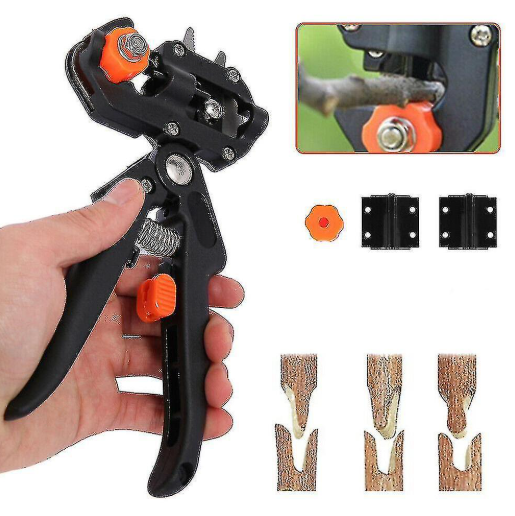
There’s also a Garden Grafting Tool Kit with 3 Blades listed for pruning and grafting plants, vines, twigs and fruit trees. (nephot.com)
You don’t need a grafting tool simply because you’re starting a garden. It’s a more specialized purchase.
For someone growing a few chillies, herbs or flowers in pots, basic maintenance tools will probably be much more relevant. For gardeners working with fruit trees or plant propagation, however, a dedicated grafting tool can have a clear purpose.
3. Watering Is a Bigger Job Than It Looks
Plants need water, but how you deliver it depends on the size and layout of your garden.
For a handful of pots, carrying a small watering container may be perfectly reasonable. Once the number of plants increases or the garden spreads across a terrace, dragging a bucket back and forth becomes less convenient.
A hose can make the job considerably easier.
Nephot’s Magic Hose Pipe is listed in 50 ft, 75 ft and 100 ft lengths and includes a seven-nozzle spray design. The product is described as lightweight, expandable and easier to store than a conventional long hose. (nephot.com)
Before choosing a hose, measure the distance you actually need to cover.
A very long hose may sound convenient, but extra length can also mean more storage space and more hose to manage. For a compact terrace, you may not need the same length that would be useful for a larger garden.
4. Sprinklers Can Make Watering Less Tedious
A hose isn’t the only option for watering.
A sprinkler can spread water over a larger area, which can be useful when you’re maintaining several plants rather than watering individual pots one by one.
Nephot lists a 360° Automatic Rotating Sprinkler System designed for garden watering. The rotating design distributes water across an area rather than concentrating it in one direction. (nephot.com)
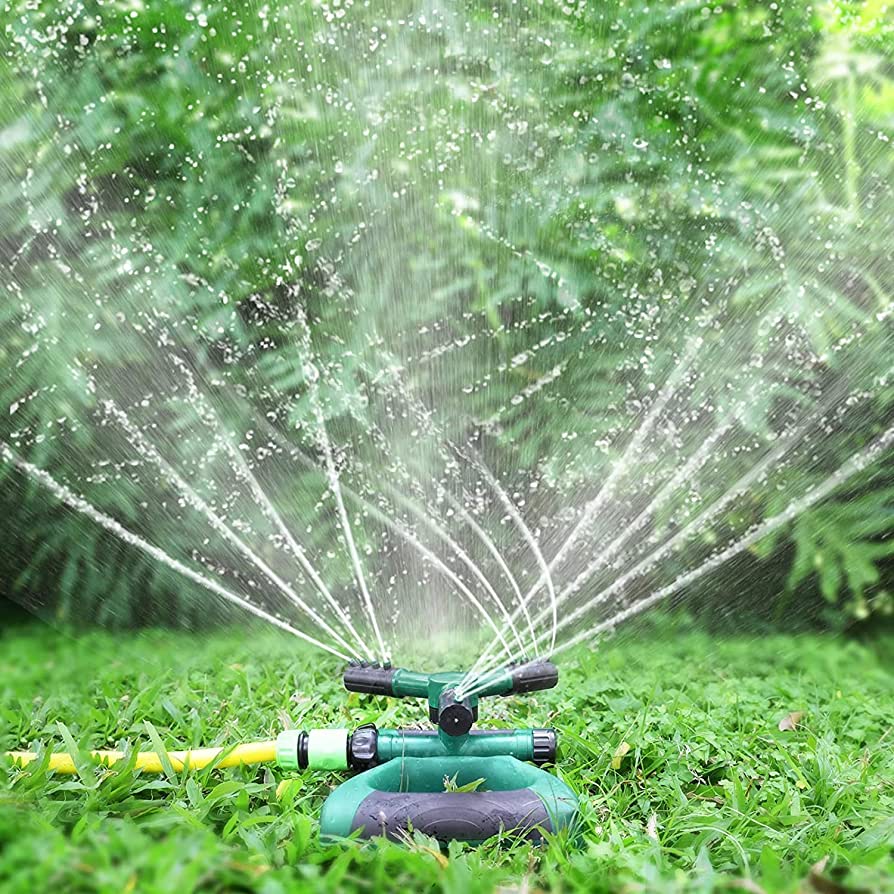
The right watering method depends heavily on your garden.
For closely arranged pots, controlled watering may be easier. For a larger outdoor area, broader coverage can save time.
Don’t assume that more water is automatically better either. The watering requirements of plants vary, and the goal is consistent watering rather than simply soaking everything whenever you have the chance.
5. Self-Watering Spikes for Potted Plants
Not everyone can water plants at the same time every day.
Work, college, travel and other commitments can make regular watering difficult, especially for people keeping plants on a balcony or inside the house.
Nephot’s Self-Watering Drip Irrigation Kit uses a spike designed to release water gradually near the plant. It is listed for potted plants, planters and both indoor and outdoor gardening. (nephot.com)
This kind of product is useful for a specific situation: you want to make watering more consistent without manually watering every pot each time.
It isn’t a replacement for understanding how much water your plants need. Different plants and growing conditions can require different watering schedules, so don’t treat a self-watering accessory as a set-and-forget solution for every plant.
6. Grow Bags Make Sense When You Don’t Want Permanent Pots
Terrace gardening often means working with whatever space is available.
Traditional pots aren’t the only option. Grow bags can be useful when you want lightweight, movable containers for plants or vegetables.
Nephot currently lists 5pcs Premium Non-Woven Fabric Plant Grow Bags designed as reusable fabric grow bags for gardening. (nephot.com)
They can be particularly practical on a terrace because individual bags can be repositioned more easily than large permanent planters.
But don’t choose a grow bag based only on the number of bags in a pack. The size needs to suit the plant you’re growing, and drainage is important for container gardening.
For rooftop or balcony gardening, there’s another consideration: weight. A large container becomes considerably heavier once it contains soil and water. Plan your placement accordingly, especially on a balcony or roof.
7. Fertilizer Tools and Plant Nutrition
Gardening equipment isn’t limited to cutting and watering.
Plants also need suitable growing conditions and nutrients. Nephot currently lists Potassium Organic Fertilizer Tablets designed to provide plant nutrition. (nephot.com)
Fertilizer should be treated as part of plant care rather than something to use simply because a plant isn’t growing quickly.
The plant species, growing medium and existing nutrient levels all matter. More fertilizer isn’t necessarily better, and the instructions for the particular product should be followed.
For someone starting a small terrace garden, getting sunlight, drainage, container size and watering right should come before building a complicated feeding routine.
8. Choose Tools Based on the Job
A useful gardening kit doesn’t have to contain every tool available.
Here’s a simple way to think about it:
| Gardening job | Tool to consider |
|---|---|
| Cutting small branches and plant growth | Pruning shears |
| Grafting plants or fruit trees | Grafting tool |
| Watering several plants | Hose pipe |
| Covering a larger garden area | Sprinkler |
| Keeping potted plants watered more consistently | Self-watering spike |
| Growing plants where permanent pots aren’t practical | Grow bags |
| Supporting plant nutrition | Suitable fertilizer |
This is more useful than buying a generic “complete garden kit” without knowing what you’ll actually use.
If you’re growing five plants on a balcony, you don’t need equipment designed for maintaining a large lawn.
What to Check Before Buying Gardening Tools in Nepal
Online shopping gives you access to a lot of gardening products, but the product photo shouldn’t be the only thing you check.
Look at the dimensions. A pruning tool that feels manageable in the listing may be larger than you expected.
Check the intended use. Pruning shears, grafting tools and hedge shears aren’t interchangeable.
Consider your garden’s size. A long hose is useful only if you have enough area to justify it.
Think about storage. Terrace and balcony gardeners often have limited space, so a compact tool that can be stored easily may be more useful than a larger alternative.
Check the material and construction. Cutting tools in particular need to be appropriate for the type of plant material you’ll be working with.
Don’t overlook maintenance. Blades need to stay clean and appropriately maintained, and tools should be stored in a dry place when possible.
The same basic principle applies to watering equipment. Check the hose length, nozzle options, connectors and intended use before ordering.
Gardening in Nepal Doesn’t Always Mean Having a Traditional Garden
For many people, gardening happens on a terrace, balcony or small area around the house rather than in a large backyard.
Terrace gardening has been used in Nepal as a way to grow flowers, vegetables and other plants where conventional garden space isn’t available. Local guidance on terrace gardening also emphasizes practical considerations such as available sunlight, suitable containers, drainage and the plants being grown.
That changes the tools you need.
Someone growing coriander, chillies and a few flowering plants in containers has a different shopping list from someone maintaining fruit trees. Start small and add tools when a particular gardening task demands them.
Build Your Gardening Kit Gradually
There’s a temptation when starting a new hobby to buy everything at once.
Gardening is one area where that can leave you with a collection of tools you barely use.
A better starting point might be one good pruning tool, a practical way to water your plants, and suitable containers. As the garden grows, you’ll discover what takes the most time. That’s when another tool starts making sense.
For someone maintaining a few potted plants, a self-watering accessory might solve a bigger problem than a specialized grafting tool. For someone growing fruit trees, the priorities could be completely different.
Nephot’s Home & Living collection includes gardening-related products alongside other household items, making it possible to compare products such as watering accessories, grow bags and garden tools in one place.
The Right Tool Is the One That Removes a Specific Problem
You don’t need an impressive-looking garden shed full of equipment to maintain healthy plants.
If cutting is the problem, get the right cutting tool. Or watering takes too long, look at a hose or sprinkler. If you’re away from home regularly, a gradual watering system may be more useful. If you’re working with fruit trees, specialized pruning or grafting equipment can become worthwhile.</p>
For people shopping for gardening tools in Nepal, the most useful starting point is therefore not the biggest list of tools. It’s an honest look at what your garden needs right now.
Once you know that, choosing the equipment becomes much easier.